
When it comes to finding the best protein for osteoporosis, the answer is more nuanced than “just eat more.” Protein is both essential and potentially problematic for bone — it’s truly a Goldilocks nutrient. Too little protein starves the very framework your bones are built on. Too much protein not balanced by alkalizing minerals and plant foods, can pull calcium right out of your skeleton. The right amount, from the right sources, in the right dietary context, is one of the most powerful bone-building strategies there is.
Protein Is a Structural Bone Builder — The Flexible “Framing” of Your Skeleton
In Dr. Susan Brown’s framework of 20 Key Bone-Building Nutrients, protein belongs to the first and most foundational category: the Structural Bone Builders. These are the nutrients that physically make up your bones. But within this system there are two sub-groups:
- Minerals (calcium, phosphorus, magnesium) — the hard, compressive “concrete and bricks” of bone.
- Organic matrix (protein and collagen) — the flexible, tensile framework of bone.
If bone is a house, the minerals are the concrete and bricks — but protein is the rebar and wooden framing that holds the whole thing together and keeps it from shattering under stress. Roughly 30–40% of bone is organic matrix, and that matrix is largely protein and collagen. Without adequate protein, the bone mineral has nothing to bond to — producing bone that is brittle, poorly organized, and prone to fracture even at normal mineral density.
This is why Dr. Brown considers protein a non-negotiable structural nutrient in her complete bone-building protocol — and why both inadequate and excessive protein can each damage bone in their own way.
Therapeutic range: 1.0–1.5 grams of protein per kilogram of body weight per day.
Why Protein Matters So Much for Bone Health
When it comes to bone nutrition, the situation with protein is somewhat of a paradox — similar to that with fats. While some protein is essential, too much is detrimental. Protein is beneficial for intestinal absorption of calcium, and protein is a major building block for bone. By weight, roughly one-third to one-half of our bone is living organic protein matrix. Protein malnutrition debilitates bone, and can be a significant problem among the elderly in Western countries.
Adequate protein is especially critical after age 50. Population studies consistently show that older adults who consume higher protein (within the therapeutic range) tend to have greater bone mineral density, better muscle mass, and lower hip fracture risk than those who fall below recommended intake.
The Problem With Too Much Protein — Chronic Low-Grade Metabolic Acidosis
Yet over-consumption of dietary protein (think Atkins-style or carnivore-heavy eating patterns) — again, if not adequately balanced with alkalizing compounds of minerals like calcium, magnesium, and potassium — can likewise lead to bone loss. In this case the loss results from an increased acid load which our bodies must buffer daily by drawing calcium and other alkalizing mineral compounds from the bones.
While adequate protein intake is certainly necessary, the average person in the US consumes far too much protein in the form of meat and dairy products. Not that either of these foodstuffs are bad per se — we just need to remember to balance them with plenty of alkalizing fruits and vegetables, including some high-carb but nutrient-dense veggies like sweet potatoes and carrots. This excess animal protein intake, when unbalanced, contributes to a state known as chronic low-grade metabolic acidosis (CLGMA), which actually washes calcium out of the body.
For more information on chronic low-grade metabolic acidosis, see Dr. Brown’s article on acid-alkaline balance.
How Much Protein Do You Actually Need for Osteoporosis?
The official Recommended Dietary Allowance (RDA) for protein is just 0.8 g/kg of body weight per day — but a growing body of research, and Dr. Brown’s decades of clinical experience, indicate that this is almost certainly too low for women over 50 and anyone actively rebuilding bone. More recent expert consensus panels now recommend 1.0–1.5 g/kg per day for older adults, especially those with osteopenia, osteoporosis, or sarcopenia.
For a 140-pound (63 kg) woman, that translates to roughly:
- Minimum bone-supportive intake: about 63 g of protein per day
- Optimal bone-rebuilding intake: 75–95 g of protein per day
Dividing that across three meals (20–30 g per meal) is important, because muscle and bone protein synthesis respond best to consistent, meal-based protein signals rather than one big bolus at dinner.
Best Protein Sources for Bone Health
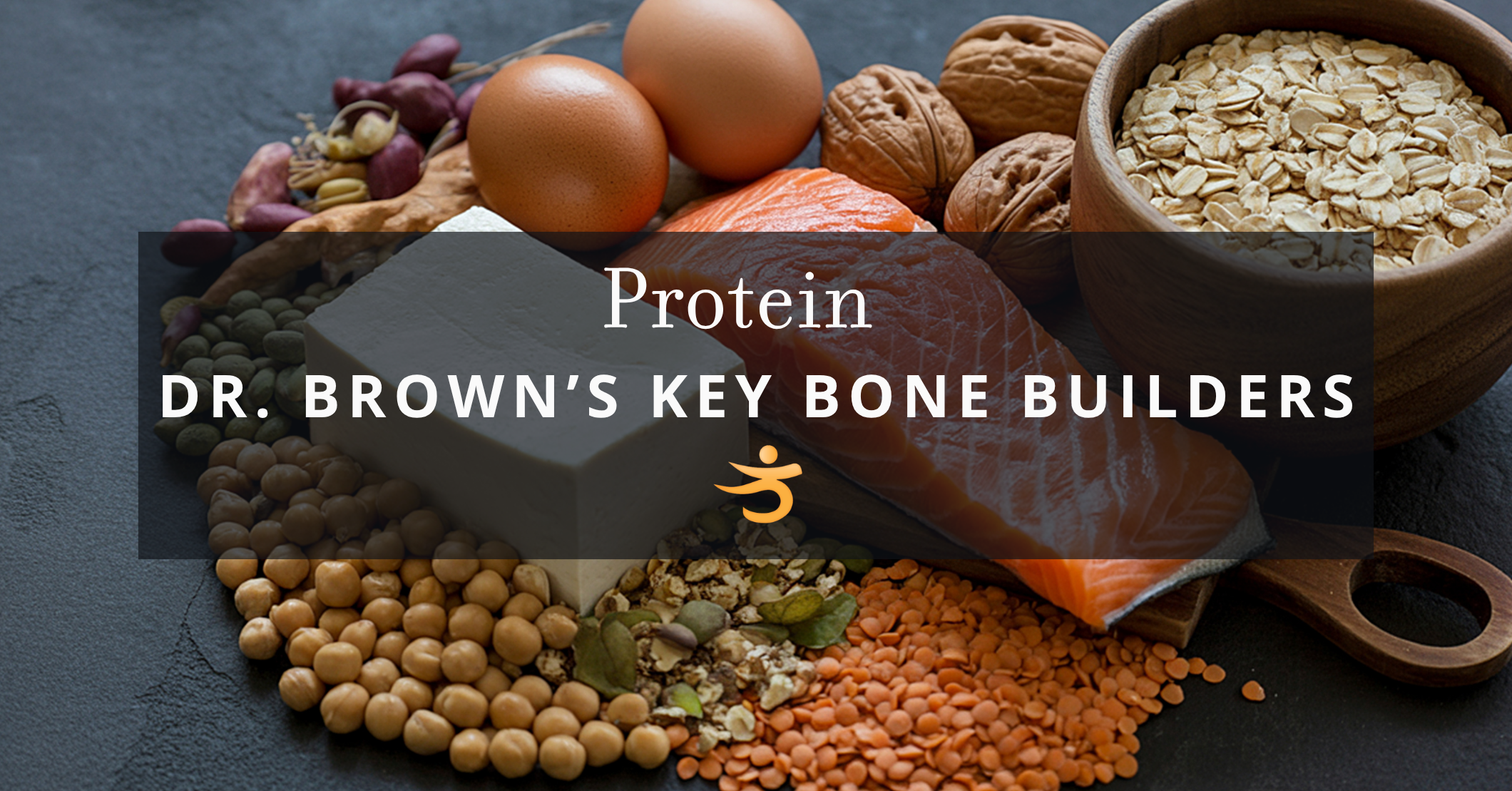
The best protein for osteoporosis is whole-food protein that delivers not just amino acids but also co-factors like calcium, magnesium, zinc, and alkalizing plant compounds:
- Wild-caught fish (salmon, sardines, anchovies) — complete protein plus calcium, omega-3s, and vitamin D
- Pastured eggs — complete protein plus vitamin K2 and choline
- Bone broth — amino acids (glycine, proline) that feed the collagen bone matrix
- Plain grass-fed yogurt and kefir — protein plus calcium and probiotics
- Legumes and lentils — plant protein plus magnesium and potassium
- Tempeh and organic tofu — complete plant protein plus isoflavones that support bone
- Nuts and seeds — protein plus magnesium, calcium, and healthy fats
- Grass-fed or pasture-raised meats, in moderation — balanced with plenty of alkalizing vegetables
What About Protein Powders?
For women who struggle to reach the 1.0–1.5 g/kg target from food alone, a clean protein powder can be helpful — particularly at breakfast, when most women under-eat protein. Look for:
- Marine collagen peptides — ideal for supporting the bone collagen matrix
- Grass-fed whey isolate — highly bioavailable for muscle and bone synthesis
- Clean pea or rice protein blends — good plant-based option when balanced with lysine-rich foods
Avoid protein powders with added sugars, artificial sweeteners, or poor-quality fillers.
The Real Secret: Pair Protein With Alkalizing Plant Foods
The single most important lesson about protein and bone is this: the same amount of protein can be protective or destructive depending on what else is on your plate. When protein is eaten alongside abundant alkalizing plant foods — vegetables, fruits, herbs, tubers — the body can metabolize and use the amino acids to build bone without triggering calcium loss. When protein is eaten in an acid-forming context (lots of meat, grains, sugar; few vegetables), the body buffers the excess acid by pulling calcium from bone.
Dr. Brown tracks this balance using first-morning urine pH testing — a simple at-home marker that tells you whether your diet is supporting alkaline balance or quietly draining bone. Persistently acidic first-morning pH (below 6.5) is often a sign that protein intake is outrunning alkalizing mineral intake (learn more about testing pH here).
Shop Dr. Brown’s Complete Bone Supplement Guide
Even the best protein intake needs the right partners — calcium, magnesium, vitamin D, vitamin K2, collagen, and alkalizing minerals — for bone to actually rebuild. Dr. Brown has created a complete, practical shopping guide that walks you through exactly which formulas and combinations she recommends for osteopenia, osteoporosis, and long-term bone maintenance — including collagen peptides and alkalizing mineral support to pair with your protein intake.
Ready to Build the Strongest Bone Matrix Possible?
Get Dr. Brown’s Complete Bone Supplement Guide — her step-by-step recommendations for protein partners and all 20 key bone-building nutrients.
Protein Is Just One Piece — Learn Dr. Brown’s Complete 6-Step Bone System
Protein balance is critical, but it’s only one piece of a much bigger picture. True, lasting bone strength requires all 20 key nutrients plus alkaline balance, healthy digestion, targeted exercise, hormone support, and the removal of bone-depleting lifestyle factors.
Inside the Better Bones Solution, Dr. Susan Brown teaches her complete 6-step protocol for building and maintaining lifelong strong bones — the same science-backed system she has used with thousands of women to rebuild bone naturally and avoid fractures, without relying solely on drugs.
Take Dr. Brown’s Better Bones Solution Course
Learn Dr. Susan Brown’s 6-step protocol for lifelong strong bones — the proven, natural approach for preventing and reversing bone loss.
Bone Health Goals Inquiry
Let us know which supplements interest you and a little about your current routine. A member of our team will reach out to help you build a personalized plan.
Bone Health Goals Inquiry
Let us know which supplements interest you and a little about your current routine. A member of our team will reach out to help you build a personalized plan.
Related Reading From Better Bones
- The 20 Key Bone-Building Nutrients — Complete Overview
- Collagen for Bone Health
- Best Calcium for Osteoporosis
- Best Magnesium for Osteoporosis
- Phosphorus and the Calcium-Phosphorus Balance
- The Benefits of Protein for Bone
- Protein and Fracture Risk
- Acid-Alkaline Balance and Bone
- Dr. Brown’s Natural Approach to Bone Health
- Science-Backed Supplements for Stronger Bones
Scientific References
- Rizzoli R, Biver E, Bonjour JP, et al. Benefits and safety of dietary protein for bone health—an expert consensus paper. Osteoporos Int. 2018. PubMed
- Groenendijk I, den Boeft L, van Loon LJC, et al. High Versus low Dietary Protein Intake and Bone Health in Older Adults: a Systematic Review and Meta-Analysis. Ageing Res Rev. 2019. PubMed
- Frassetto LA, Morris RC Jr, Sellmeyer DE, Sebastian A. Adverse effects of sodium chloride on bone in the aging human population resulting from habitual consumption of typical American diets. Eur J Nutr. 2008. PubMed
- National Institutes of Health, Office of Dietary Supplements. Calcium Fact Sheet for Health Professionals. ods.od.nih.gov