

Quick Answer: Osteopenia — lower-than-average bone density — is a signal worth taking seriously, not a diagnosis to fear. Nine evidence-informed nutritional and lifestyle steps can help support healthier bones, including optimizing Vitamin D3, Vitamin K2, and Magnesium intake, adopting an alkaline-forming diet, and engaging in regular weight-bearing exercise.
Osteopenia Treatment Natural: 9 Things You Should Do Today
If you have been told you have osteopenia, take heart: this is often the ideal time to take action. A smart osteopenia treatment natural plan can help you protect bone, improve bone-building nutrition, and support long-term skeletal strength before more serious bone loss develops.
At Better Bones, we believe your bones respond best when you support the whole body: minerals, digestion, movement, hormone balance, inflammation, and lifestyle all matter. Here are 9 important steps you can begin today.
What Is Osteopenia?
Osteopenia means your bone density is lower than normal, but not low enough to be classified as osteoporosis. Think of it as an early warning sign. Rather than waiting and watching, this is the perfect stage to begin a strong, natural bone-support program.
A well-designed osteopenia treatment natural strategy focuses on preserving bone, improving bone quality, and identifying the underlying factors that may be contributing to bone loss.
1. Follow an Alkaline-Forming, Mineral-Rich Diet
One of the most important natural strategies for bone support is a diet built around vegetables, fruits, nuts, seeds, legumes, and other whole foods that help supply the body with alkaline-forming minerals. Dr. Brown has long taught that bones are affected by the body’s overall mineral economy. When your diet falls short on mineral-rich plant foods, the body may struggle to maintain ideal reserves for bone maintenance.
Focus on a daily pattern that includes abundant produce, adequate clean protein, and fewer ultra-processed foods, sugary foods, and excess sodium.
Read more here: Alkaline Diet for Bone Health
2. Check Your Mineral Reserve with First Morning Urine pH
Diet matters, but so does feedback. One practical tool Dr. Brown often recommends is checking your first morning urine pH. While it is not a diagnosis, it can be a useful at-home way to monitor whether your dietary pattern is supplying enough alkalizing minerals on a regular basis.
This step can help reinforce whether your current bone-support program is moving in the right direction.
Support your mineral intake with: Alkalizing Minerals
3. Make Sure You Are Eating Enough Wholesome Food
Bone is living tissue, and it requires steady nourishment. If you are under-eating, skipping meals, or losing weight unintentionally, you may also be compromising your bones. This is especially important in midlife and beyond, when low body weight and poor nutrient intake can contribute to lower bone mass.
Your bones need enough calories, enough protein, and a wide variety of micronutrients to maintain strength. A good osteopenia treatment natural plan is never just about one pill or one nutrient. It is about consistent daily nourishment.
4. Get Adequate Protein to Build Bone Matrix
Bone is not made of minerals alone. Nearly half of bone volume is protein matrix. Without enough protein, it becomes difficult to build and maintain strong, resilient bone structure.
Aim for steady protein intake throughout the day from quality sources that work for your body. For many adults, that means being intentional rather than assuming they are getting enough.
Related reading: Protein Benefits for Bone Health
5. Obtain the Full Range of Bone-Building Nutrients
Calcium may get all the headlines, but healthy bones require much more than calcium alone. Magnesium, vitamin D, vitamin K, trace minerals, vitamin C, and many other nutrients all contribute to bone metabolism, bone structure, and healthy remodeling.
That is why a natural approach to osteopenia should look at the full spectrum of nutrients involved in bone health, not just one or two.
Start here: The 20+ Nutrients Your Bones Need
6. Avoid Bone-Depleting Foods, Habits, and Anti-Nutrients
Natural bone support is not only about what you add. It is also about what you reduce. High sugar intake, excess soda, smoking, heavy alcohol use, highly processed foods, and too much caffeine can all work against strong bones over time.
Stress also belongs on this list. A chronically stressed body shifts physiology in ways that can undermine repair and resilience, including bone renewal.
Creating a better bone environment means reducing the daily inputs that drain the body.
7. Use Exercise to Build Bone and Muscle
Bones respond to force. Weight-bearing activity, resistance training, and impact exercise where appropriate can all help send the body the message that bone is needed and should be maintained.
Muscle strength matters too. Strong muscles pull on bone and help stimulate healthy adaptation. Walking, strength training, heel drops, posture work, and targeted spinal strengthening can all play a role depending on your needs.
Read more: Strong Back Muscles Decrease Fracture Risk
Related: Thin Women and Hip Bone Loss
Shop support tools here: Exercise Products for Better Bones
8. Improve Digestion and Nutrient Assimilation
You can eat the best diet in the world, but if digestion is weak, absorption may be compromised. Gas, bloating, reflux, food sensitivities, irregular stools, and chronic digestive discomfort can all be signs that your body is not breaking down and assimilating nutrients efficiently.
Because bones depend on a steady stream of usable nutrients, digestive health is a foundational part of any osteopenia treatment natural program.
Helpful reading: 10 Steps to Better Digestion
9. Test, Track, and Look for Hidden Causes
If bone loss continues despite your efforts, dig deeper. Ongoing osteopenia may reflect hidden contributors such as inflammation, medication effects, hormonal imbalances, digestive issues, nutrient insufficiency, or other medical factors.
Use follow-up bone density testing to monitor trends over time, and work with a knowledgeable practitioner to identify possible underlying causes when needed.
The Bottom Line on Osteopenia Treatment Natural Support
If you are searching for osteopenia treatment natural solutions, the best approach is comprehensive rather than piecemeal. Nourish the body with mineral-rich foods, obtain the full range of bone nutrients, exercise wisely, support digestion, manage stress, and test intelligently when needed.
Osteopenia is not a reason to panic. It is a reason to act. With the right daily steps, you can create a stronger internal environment for healthier bones.
Take the Next Step with Better Bones
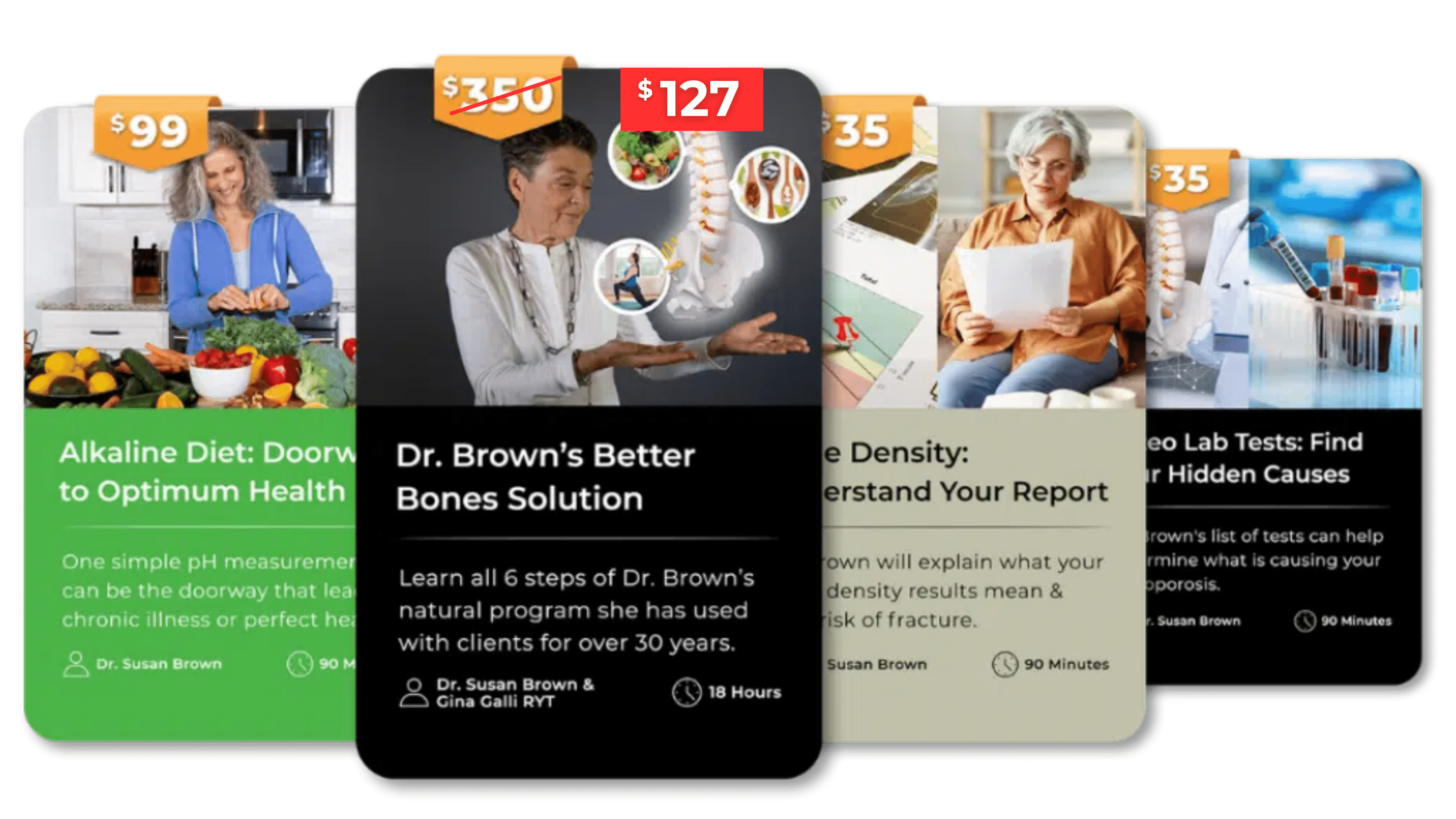
If you want a step-by-step system based on Dr. Susan Brown’s decades of work in natural bone health, explore the Better Bones Solution Masterclass. It brings together the key principles of building strong bones naturally through diet, lifestyle, exercise, and targeted nutrient support.

About the Author
New York State Certified Nutritionist & Medical Anthropologist | Founder, Center for Better Bones
Dr. Brown has dedicated more than 40 years to bone health research, clinical nutrition, and health education. She is the founder of the Center for Better Bones and the Better Bones Foundation, and author of Better Bones, Better Body — the first comprehensive guide to natural bone health. Her whole-body, alkaline-centered approach has helped thousands of women build stronger bones naturally.