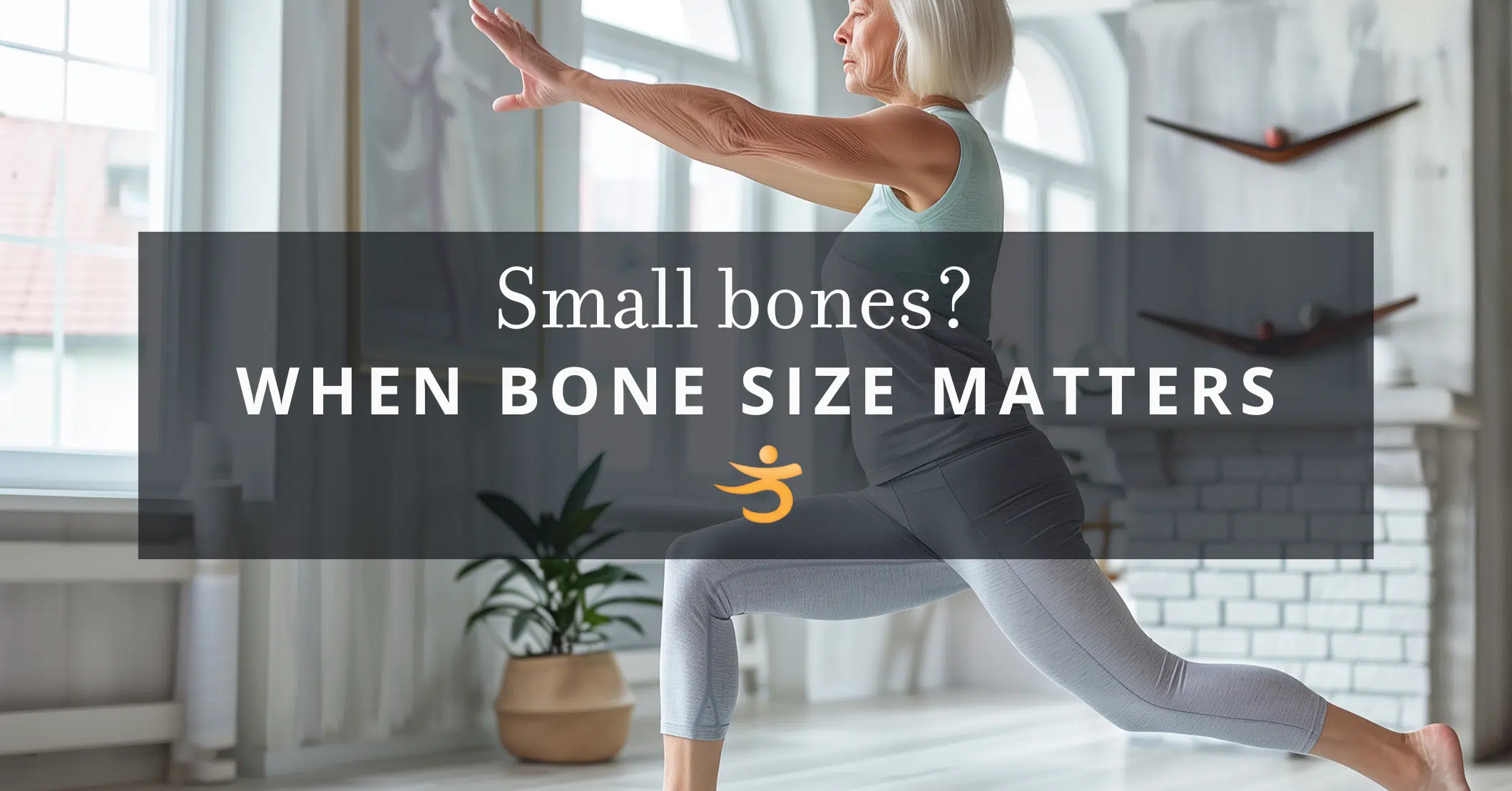
Are small-boned women being misdiagnosed with osteoporosis?
For decades, I’ve seen it again and again: petite, light-framed women—often active, vibrant, and otherwise healthy—being told they have osteoporosis based on their bone density test results. They haven’t had fractures. They don’t show major risk factors. Yet they leave the testing center with a diagnosis that can feel devastating.
Over time, I began to suspect what now many researchers are confirming—these women are being misdiagnosed. Their low DEXA (bone density) scores do not necessarily mean their bones are weak. In fact, for women with smaller bones, these test results may be giving a false picture of fragility.
What Dr. Henry Paul Golding’s research reveals
Recently, Australian researcher Dr. Henry Paul Golding published a groundbreaking study confirming what many of us have observed for years: individuals with smaller bones are disproportionately diagnosed with osteoporosis when, in reality, their bones may be perfectly strong and healthy.
Dr. Golding’s 2022 study, published in Bone Reports, demonstrated that the current bone mineral density (BMD) testing method—DEXA—systematically underestimates bone strength in smaller bones. His team used artificial vertebrae of varying sizes to show that DEXA readings decline as bone size decreases, even though the actual “true” bone density remains the same.
In other words, the machine isn’t measuring bone weakness—it’s measuring bone size, and confusing smaller volume with lesser strength. This creates a widespread pattern of false positives for osteoporosis among petite women.
Why this happens: DEXA’s design problem
To understand this, we need to look closely at what a DEXA scan really measures. The term “bone mineral density” makes it sound as if the test measures how dense or solid your bone tissue is—but that’s not quite true.
A true density measurement would require a three-dimensional (3D) assessment of bone volume—its length, width, and depth. DEXA, however, is a two-dimensional (2D) imaging technology. It projects X-rays through bone and records an areal (surface-based) measurement—essentially the mineral content spread across an area of bone, not within its full volume.
Because the DEXA scan flattens a 3D structure into a 2D image, people with smaller bones naturally appear to have “less dense” bone, even when the mineral concentration per unit of volume is the same. That’s why a petite woman’s bones can look osteoporotic on paper, when in reality, her bone strength may be perfectly normal.
The problem has been known for decades
This isn’t a new revelation. The influence of bone size on DEXA readings has been known in the scientific community for decades—but rarely discussed in clinical practice or public health messaging.
Unfortunately, DEXA manufacturers have not corrected this flaw. As Dr. Golding emphasized, “the areal bone mineral density testing results given by both DEXA devices are not in any way corrected for the difference in bone size.”
So while DEXA technology has become the “gold standard” for diagnosing osteoporosis, its results can be misleading for millions of women—particularly those who are short, thin, or small-framed.
More cracks in the DEXA model
DEXA’s size bias isn’t the only problem. There are several other reasons why bone density testing may not tell the full story:
- High error rate: Studies suggest that as many as 90% of DEXA scans contain errors, and about half of these are significant enough to alter diagnosis or treatment decisions. Calibration issues, positioning errors, and operator variability can all skew results.
- Poor fracture prediction: DEXA results are not reliable predictors of fracture risk. Research from around the world documents that up to 80% of fractures occur in people with normal or osteopenic DEXA results, not in those labeled osteoporotic. Clearly, something more than “density” determines bone resilience.
- Narrow definition of bone health: Bone strength is a complex interplay of bone architecture, turnover rate, mineralization, collagen quality, and muscle support—none of which are measured by DEXA. The test focuses narrowly on one number and ignores the living, dynamic nature of bone tissue.
Taken together, these limitations make diagnosing the disease of osteoporosis by DEXA bone density, a “good try that didn’t quite work out.” DEXA bone density testing value as one piece of information—but it should never be used in isolation to define a person’s bone health , diagnosis the disease of osteoporosis or to dictate treatment.
A better way to view bone health
If bone density testing has these flaws, what should women do instead? The answer lies in taking a broader, more holistic view of bone health—one that considers the whole person, not just a single scan result.
Here are a few empowering steps you can take right now:
- Know your real risk factors
Your fracture risk depends on many variables—nutrient status, exercise patterns, chronic inflammation, antioxidant status, toxic load, family history, use of bone-depleting medications, pH balance and degree of chronic low grade metabolic acidosis, balance of numerous hormones including cortisol, DHEA, PTH, progesterone, estrogen and testosterone and much more.
Our Better Bones Fracture Risk Assessment can help you identify the most relevant factors for you. A.
Remember: multiple small risk factors matter more than a single DEXA score.
- Support your muscle–bone connection
Bone and muscle are intimately linked. As research shows, you gain and lose them together. Strength training, resistance work, yoga, or even regular brisk walking can dramatically improve bone density, balance, and fracture resilience.
- Optimize nutrition and pH balance
Your bones thrive in a slightly alkaline environment. A diet rich in vegetables and fruits of all colors, adequate protein, and all 20 key bone nutrients including minerals—especially calcium, magnesium, potassium, and vitamins K2, C and all B vitamins—help preserve bone structure and reduce bone-depleting acidity.
- Mind your hormones and thyroid
Hormones like cortisol, DHEA, PTH, estrogen, progesterone, and thyroid hormones profoundly influence bone remodeling. If you’re in midlife or post-menopausal, or if you’re on thyroid medication, it’s worth working with an integrative practitioner to keep these hormones balanced. Both excess and thyroid hormone levels jeopardize bone.
- Manage stress
Chronic emotional, mental stress and worry raises cortisol, which can rob calcium from bones. Cultivating resilience, practicing meditation and deep breathing exercises, and adequate rest are not luxuries—they’re bone-building essentials.
- Get sunlight and vitamin D
Your body needs vitamin D to absorb calcium and maintain healthy bone turnover. Aim for sensible sun exposure. Know that we produce vitamin D from a small spectrum of solar ultraviolet radiation. Dermal production of vitamin D precursors occur when your shadow is shorter then you are.
Due to the limited amount of time we spend outdoors and contemporary concerns with excessive unlight exposure, most individuals need to supplement with vitamin D3. At the Center for. We suggest reaching an optimum. 50 to 60 ng/ml vitamin 25 OHD level (equivalent to 125-150 nmol/L in European units.
The power of perspective: take heart and take action
If your DEXA results have worried you—especially if you’re small-framed—take a deep breath. Numbers don’t define your health or your destiny. As Dr. Golding’s research and decades of clinical observation show, many small-boned women have been unfairly labeled “osteoporotic” when they are not.
Bone health is not static—it’s dynamic and reversible. Your bones are living tissues, constantly remodeling in response to how you move, eat, think, and rest. You have enormous capacity to rebuild and maintain bone strength naturally.
At Better Bones, our goal is to help you understand the bigger picture—to replace fear with knowledge and confusion with empowerment. If you’re ready to go deeper, explore our Better Bones Solution 6-Step Program and the Better Bones Solution Masterclass to learn how you can build Better Bones and a Better Body for life.
Take heart, take action, and remember: your body has an extraordinary ability to renew itself when given the right support.
Reference:
Golding, H. P. (2022). Dual-energy X-ray absorptiometry (DXA) to measure bone mineral density (BMD) for diagnosis of osteoporosis—experimental data from artificial vertebrae confirms significant dependence on bone size. Bone Reports. PubMed link
About the Author
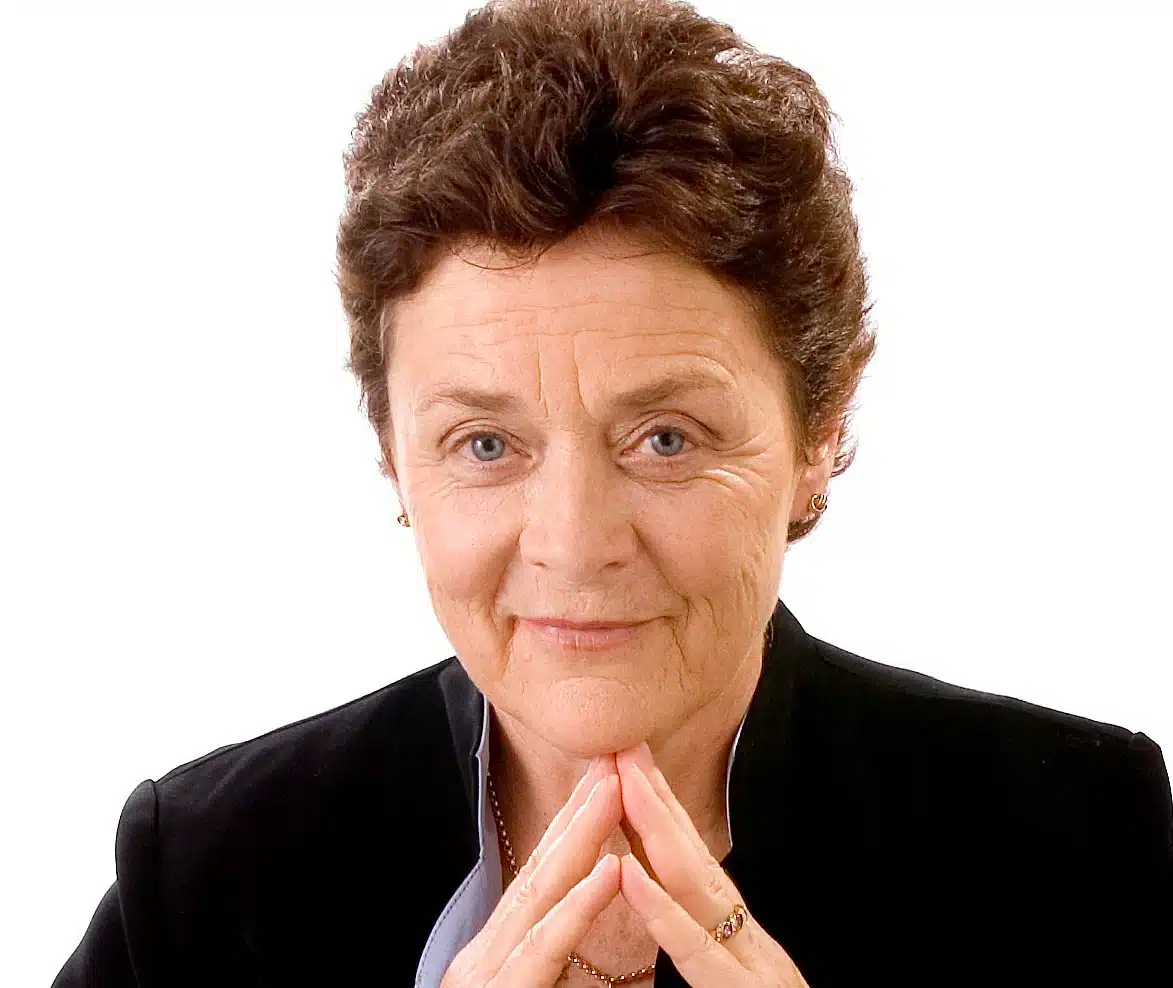
New York State Certified Nutritionist & Medical Anthropologist | Founder, Center for Better Bones
Dr. Brown has dedicated more than 40 years to bone health research, clinical nutrition, and health education. She is the founder of the Center for Better Bones and the Better Bones Foundation, and author of Better Bones, Better Body — the first comprehensive guide to natural bone health. Her whole-body, alkaline-centered approach has helped thousands of women build stronger bones naturally.
For a complete guide to rebuilding bone naturally, see our resource on natural osteoporosis support and bone rebuilding.
Read our complete guide to bone density testing explained.
To build bone through movement, explore the Better Bones Exercise for Osteoporosis program.